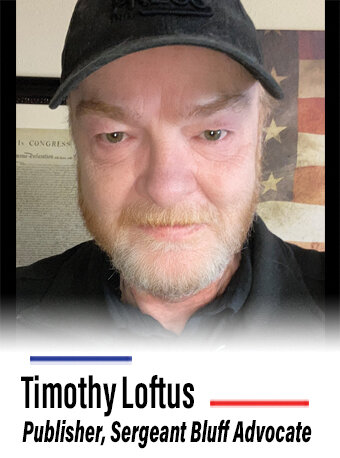
By Timothy Loftus, Editor & Publisher | Sergeant Bluff Advocate
(SBA) - Freedom of the press and public notice laws protect the public. We live with the results of press freedom every day. You see it when a city budget appears before a tax vote. You see it when a school board posts an agenda before a meeting. You see it when a reporter names a public official who abused power and publishes the documents that prove it. You also feel the absence of press freedom when information disappears, when meetings move out of view, and when fear replaces accountability.
Freedom of the press does not exist to flatter reporters or shield news companies. It exists to protect you. It allows the public to see how power operates and how tax money is spent. It provides verified facts that let you make decisions about your life, your work, and your vote. When that freedom weakens, the cost falls on everyone.
Hannah Natanson of The Washington Post spent a year demonstrating how this freedom works in practice. She described herself as a federal government whisperer. Federal workers across multiple agencies contacted her to explain how policy changes affected their jobs and missions during the current administration’s reshaping of the federal government. Many of these workers faced real risks. They feared retaliation, job loss, or the revocation of security clearances. They spoke because they believed the public had a right to know what the government was doing in its name.
Natanson did not publish claims as she received them. She verified them. She checked records. She compared accounts across agencies. She confirmed timelines and policies. She applied the standards that separate journalism from rumor. That process takes time and care. It also leaves a trail. Sources communicate. Reporters store notes. Devices hold records.
CNN recently reported that FBI agents arrived at Natanson’s home and executed a search warrant. According to the Post, agents seized one phone and two computers. Attorney General Pam Bondi alleged in a post on X that Natanson was obtaining and reporting classified and illegally leaked information from a Pentagon contractor. Under the banner of national security, the government claimed it needed to protect sensitive information. The raid sent a broader message. It told sources that contact with a reporter could lead to exposure. It told reporters that routine newsgathering could trigger law enforcement action. That message matters more than any single device. It alters behavior.
Reporters rely on people who come forward to expose wrongdoing. Those people act at personal risk. They do not hand over finished stories. They provide fragments, documents, and context. A reporter tests those fragments against reality. A reporter calls agencies for comment. A reporter checks laws and budgets. A reporter rejects claims that do not hold up. This work reduces error and prevents harm. It also protects people from false accusations and fabricated narratives.
Most people understand the difference between unverified claims and verified reporting. You see a tabloid headline about six foot irritated chickens running around Texas and you recognize it as fiction. You put it back. You see a report in The Wall Street Journal or The New York Times about a government official taking bribes and you pay attention. You trust the process behind the words. That trust rests on verification and accountability. It also rests on legal exposure. News organizations operate under defamation law. False statements can lead to lawsuits and damages. Editors and reporters know this and act accordingly.
History shows what happens when sources and reporters work together to confront power. Watergate remains a clear example. Reporters followed leads and confirmed facts. A source known as Deep Throat provided guidance, not headlines. The reporting led to investigations and consequences. The press did not act alone. It worked alongside courts and Congress. The result upheld the rule of law.
Fear can break this system. When sources believe the government will punish them for speaking, they stay silent. When reporters believe the government will seize their tools, they avoid difficult stories. You then see less and know less. Power moves with fewer checks. Governments often justify secrecy as protection. They claim security or efficiency. That justification spreads quickly. Transparency narrows. Secrecy expands. Officials shield themselves from scrutiny when they believe their actions may violate law or ethics.
The First Amendment matters because it sets a boundary. It tells the government it may not punish speech or the press for doing their jobs. This protection does not guarantee comfort. It does not prevent pressure. It does not eliminate mistakes. It creates space for truth to emerge through testing and debate. When that space shrinks, the public loses its ability to correct course.
Public notice laws provide a clear and practical example. These laws require local, state, and federal governments to publish budgets, meeting agendas, and proposed actions. They exist so you can see how officials plan to spend public money or change rules that affect daily life. Notice enables participation and accountability.
Iowa residents have long relied on public notices published in local newspapers and now collected online by the Iowa Newspaper Foundation. The system already works. Anyone can search and view notices for free at iowapublicnotices.com. The database covers the entire state. It offers transparency without cost to taxpayers.
Despite this, over the past several years the Iowa Legislature has pushed to change the law and move public notices into a new system controlled by the Office of the Secretary of State. That move would remove control from an established independent organization and place it directly under government authority.
You should be concerned when governments seek control over access to information about themselves. The stated reason is usually modernization or efficiency. The reality is darker. Control over the information you see also controls how you see it. The current public notice system already exists. It works. It is independent and protected from government overreach. It costs the public nothing. Replacing it would require new spending and new bureaucracy.
The Iowa Newspaper Association represents independent newspapers across the state. It does not answer to lawmakers. It exists to keep communities informed. It publishes notices because the law requires transparency. It also serves as a watchdog. When the legislature moves to remove that role, it removes an independent check.
That leads to the obvious question. Why replace a functional system with a government controlled one. Why spend public money to duplicate what already exists. Why centralize control over information the public has a right to see. The proper response follows naturally. What are you trying to hide.
When the government controls access, it controls priorities. It decides how information is organized, how long it remains visible, and how easy it is to find. Even small changes can limit exposure. Notices become harder to locate. Deadlines shrink. Public awareness drops.
This pattern mirrors broader threats to press freedom. Control does not always arrive as an outright ban. It often appears through subtle barriers. Complexity replaces clarity. Bureaucracy replaces independence. The result looks technical but carries real consequences.
You see similar dynamics when officials invoke secrecy to avoid scrutiny. Governments move quickly from transparency to concealment when they fear accountability. They cite security or confidentiality. They withhold documents and delay responses. Each delay weakens oversight.
Iowans rely on laws that require notice. Public notice laws tell you when officials meet, what they plan to discuss, and how they intend to spend public money. These laws exist so you can show up, comment, and object. They exist so journalists can report before decisions take effect. They exist to prevent quiet deals that bind you without your knowledge. These laws exist so you can act before it happens, not after when nothing can be changed.
Verified reporting shows that similar shifts in other states reduced visibility. Civic studies have found that notices placed only on government websites receive fewer views than those published through independent channels like local newspapers. Reduced visibility weakens participation and enforcement. When fewer eyes watch, errors last longer and abuse hides more easily.
You should care because public notice does not serve journalists alone. It serves property owners facing tax changes. It serves parents tracking school board decisions. It serves workers following zoning and permits. It serves everyone who pays into public budgets. When notice systems weaken, your ability to respond weakens with them.
The same pattern appears at the federal level. When agencies limit communication, restrict data access, and intimidate sources, reporting suffers. Natanson’s experience shows the stakes. Her work relied on multiple sources. Her reporting explained how policy changes affected disaster response, civil service protections, and agency missions. Without those sources, the public would have received only official statements, which rarely tell the full story.
You can take practical steps to defend press freedom. Support outlets that practice verification. Read beyond headlines. Value corrections. Attend public meetings. Use public notice tools like iowapublicnotices.com. When lawmakers propose changes that reduce independent access, ask why. Demand evidence that new systems improve access rather than restrict it. Contact representatives and ask why public money should be spent replacing a system that already works.
Journalists also carry responsibilities. They must protect sources through secure practices. They must challenge overbroad claims of national security. They must push back in court when necessary. They must explain their methods. Transparency about process builds trust.
Courts matter as well. Strong shield laws protect reporters from forced disclosure. Clear standards limit raids and seizures. Legislatures can strengthen these protections. Weak laws invite abuse. Strong laws deter it.
You should not accept the idea that secrecy equals safety. Democratic systems depend on informed consent. Consent requires information. Information requires a free press. When governments shift from transparency to secrecy, they often do so to avoid accountability. That shift may feel gradual, but it accelerates once normalized.
The loss of press freedom does not arrive all at once. It comes through small changes. A raid justified by security. A notice system placed behind a login. A meeting time shifted with little warning. Each change narrows your view. Over time, the picture fades.
You benefit when reporters ask hard questions and verify answers. You benefit when sources speak without fear. You benefit when public notice remains independent and visible. These are not abstract values. They shape taxes, services, and rights.
Freedom of the press is a practical tool. It allows you to see power and respond to it. When it weakens, we lose leverage. Protecting it protects your ability to govern yourselves.